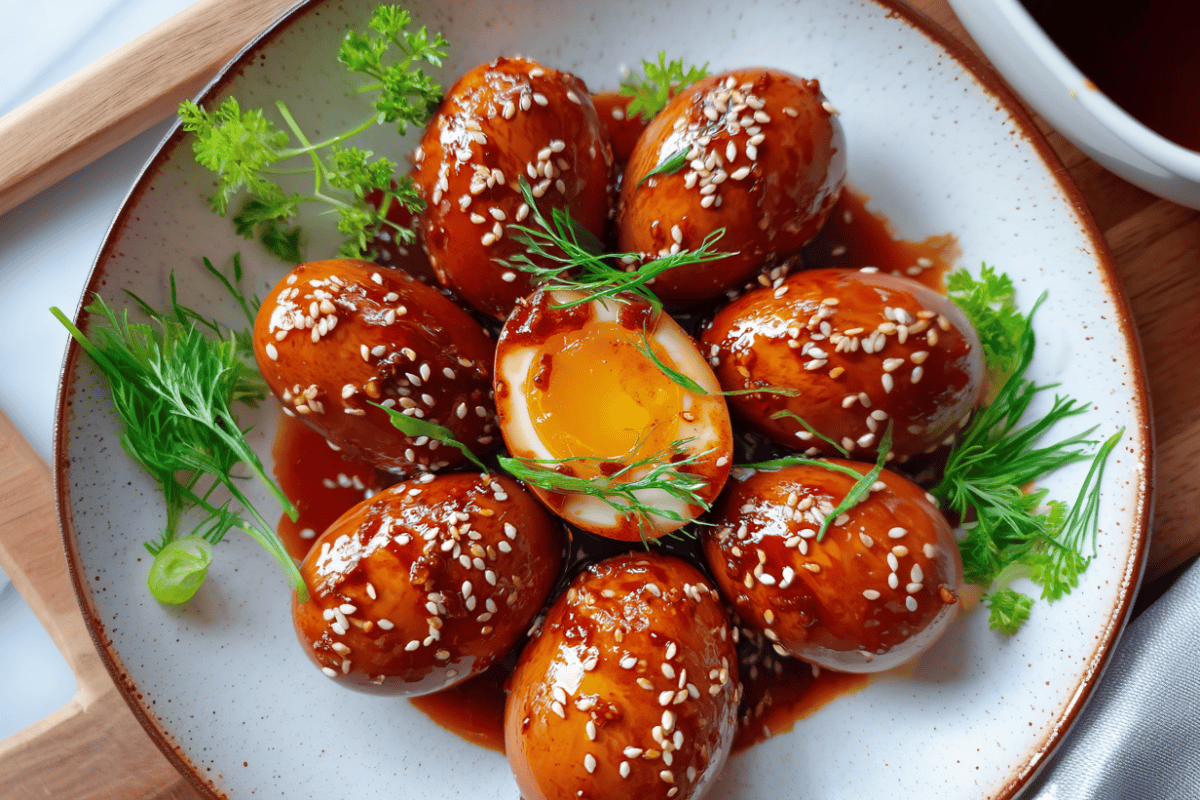
If you think eggs are boring, let me stop you right there. Gochujang Eggs are here to flip that idea upside down. Spicy, savory, slightly sweet, and deeply umami, this dish turns simple eggs into something bold, addictive, and unforgettable. Whether you’re making breakfast, meal-prepping protein, or building a quick rice bowl, these eggs deliver big flavor with minimal effort.
Table of Contents
Table of Contents
In this guide, we’ll dive deep into everything you need to know about gochujang eggs: what they are, why they’re so popular, how to make them perfectly every time, and all the delicious ways to serve them. By the end, you’ll wonder how eggs ever tasted good without gochujang.
Print
Gochujang Eggs Recipe – Spicy Korean-Inspired Eggs for Breakfast & Meal Prep
- Total Time: 13 minutes
- Yield: 6 eggs
- Diet: Vegetarian
Description
Spicy and savory Gochujang Eggs – a quick Korean-inspired egg recipe perfect for breakfast or meal prep.
Ingredients
- 6 large eggs
- 2 tbsp gochujang
- 1 tbsp soy sauce
- 1 tsp sesame oil
- 1 tsp sugar or honey
- 1 clove garlic, minced
- 1 tbsp water (or broth)
- Optional: sesame seeds, chopped green onions
Instructions
- Boil eggs 6–8 minutes, then transfer to ice bath and peel.
- Mix gochujang, soy sauce, sesame oil, sugar, garlic, and water to make sauce.
- Toss peeled eggs in sauce or marinate 4–24 hours for deeper flavor.
- Serve hot or cold, garnished with sesame seeds and green onions.
Notes
- Adjust gochujang for desired spice level.
- Marinating eggs enhances flavor.
- Best stored in an airtight container in the fridge for up to 3 days.
- Not suitable for freezing.
- Prep Time: 5 minutes
- Cook Time: 8 minutes
- Category: Breakfast, Snack
- Method: Boiling, Marinating
- Cuisine: Korean-Inspired
What Are Gochujang Eggs?
At their core, gochujang eggs are eggs coated or marinated in a sauce made with gochujang, the iconic Korean chili paste. Depending on the method, the eggs can be:
- Soft-boiled and marinated
- Jammy-centered with a sticky glaze
- Pan-fried or simmered in sauce
- Served whole, halved, or sliced
The magic lies in the sauce. Gochujang brings heat, fermented depth, and a subtle sweetness that clings beautifully to eggs.
What Is Gochujang and Why Does It Work So Well?
A Quick Intro to Gochujang
Gochujang is a Korean fermented chili paste made from:
- Red chili powder
- Glutinous rice
- Fermented soybeans
- Salt
It’s thick, deep red, and packed with flavor.
Why Eggs Love Gochujang
Eggs are mild and creamy. Gochujang is bold and spicy. Together, they balance each other perfectly.
- The yolk mellows the spice
- The sauce adds excitement to the whites
- Fermentation brings umami depth
Think of it like peanut butter and jelly, but Korean and spicy.
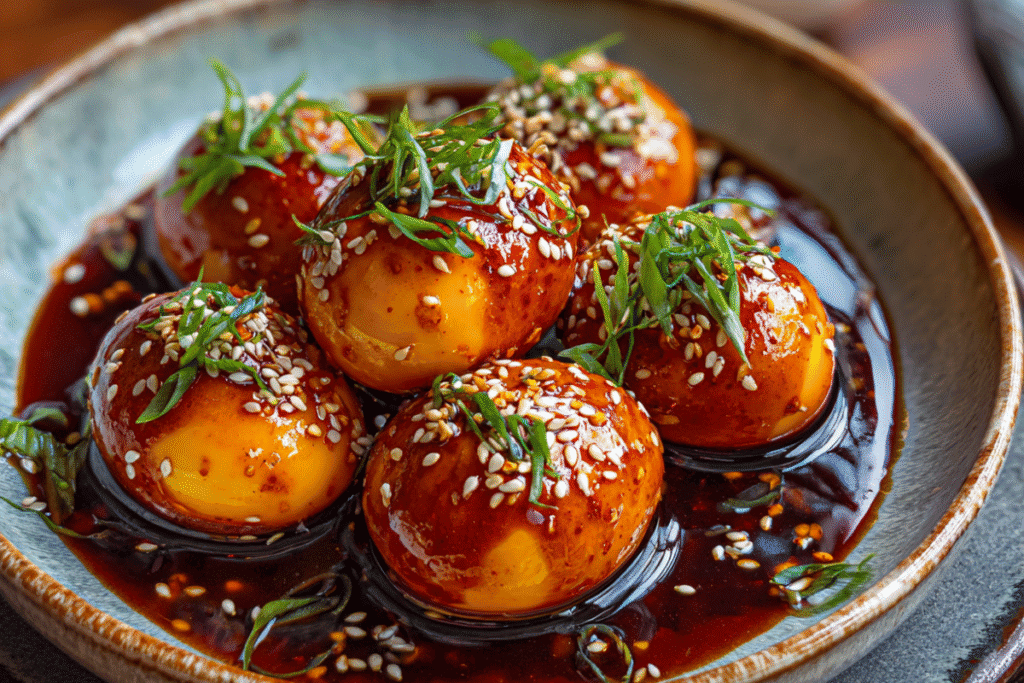
Why These Eggs Are So Popular Right Now
They’re Fast and Foolproof
You can make them in under 20 minutes, sometimes even less.
They’re Meal-Prep Friendly
These eggs store beautifully in the fridge and taste even better the next day.
They Fit Many Diets
- High-protein
- Naturally gluten-free (with gluten-free gochujang)
- Vegetarian
- Low-carb friendly
They’re Social-Media Gold
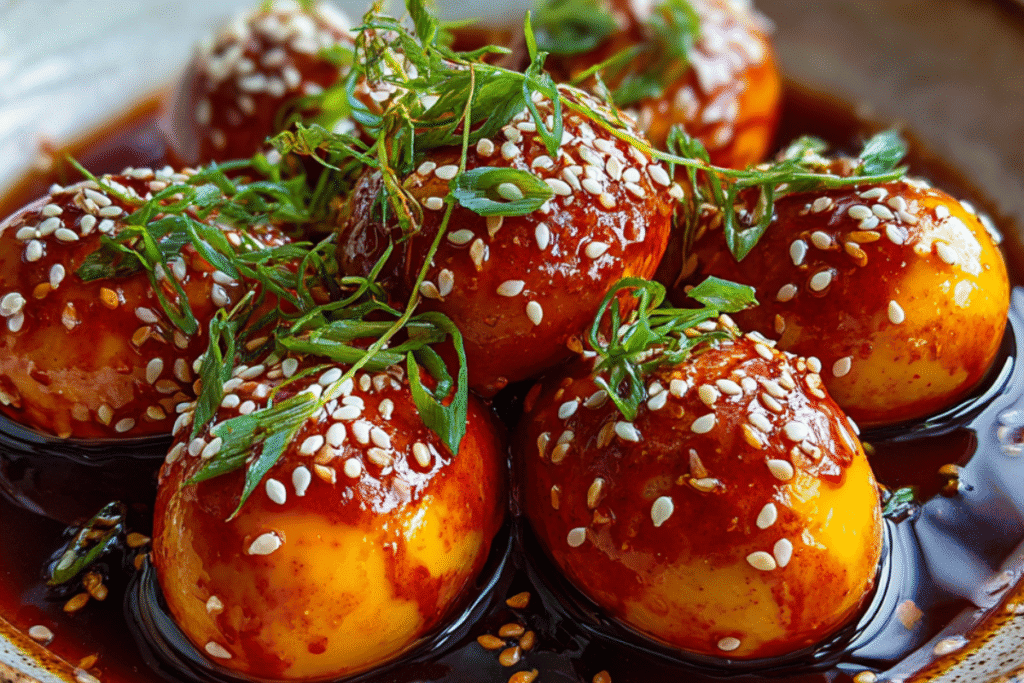
That glossy red sauce over jammy yolks? Camera loves it.
Ingredients You’ll Need for This Recipe
Main Ingredients
- Eggs (large)
- Gochujang
- Soy sauce
- Garlic
- Sugar or honey
- Sesame oil
- Water or broth
Optional Add-Ins for Extra Flavor
- Rice vinegar or mirin
- Gochugaru (Korean chili flakes)
- Green onions
- Sesame seeds
Choosing the Right Eggs
Best Egg Size
Large eggs work best for consistent cook times.
Fresh vs Older Eggs
- Slightly older eggs peel more easily
- Fresh eggs have firmer whites
Both work, so don’t stress.
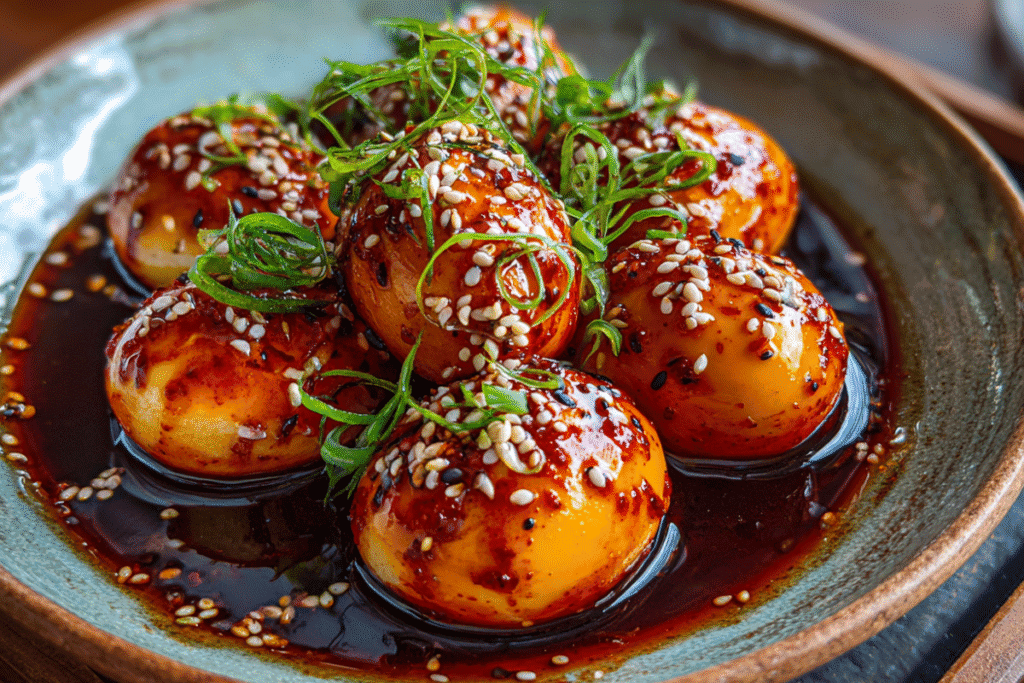
How to Make Gochujang Eggs (Step-by-Step)
Step 1: Cook the Eggs
Bring a pot of water to a boil, then gently lower in the eggs.
- 6 minutes: very jammy yolk
- 7 minutes: creamy center
- 8 minutes: mostly set but tender
Immediately transfer to an ice bath to stop cooking.
Step 2: Peel the Eggs
Crack from the wider end where the air pocket is. Peel gently under running water for best results.
Step 3: Make the Gochujang Sauce
In a bowl, mix:
- Gochujang
- Soy sauce
- Minced garlic
- Sugar or honey
- Sesame oil
- A splash of water
Stir until smooth and glossy.
Step 4: Coat or Marinate
You have two options:
- Quick glaze: Toss eggs in warm sauce and serve immediately
- Marinated eggs: Submerge eggs in sauce and refrigerate for 4 to 24 hours
Both are delicious. Marinating gives deeper flavor.
Different Styles of Gochujang Eggs
Marinated Gochujang Eggs
Perfect for meal prep and ramen toppings. The sauce penetrates the egg whites, seasoning every bite.
Sticky Gochujang Glazed Eggs
Cooked eggs are simmered briefly in sauce until glossy and thick. Great served hot.
Pan-Fried Gochujang Eggs
Eggs are halved and lightly seared before being coated in sauce for extra texture.
Tips for Perfect Gochujang Eggs Every Time
Balance the Heat
Gochujang varies in spice level. Taste and adjust.
- Too spicy? Add honey or sugar
- Too sweet? Add soy sauce or vinegar
Don’t Overcook the Sauce
High heat can make it bitter. Gentle simmer is key.
Let Them Rest
If marinating, give the eggs time. Flavor builds with patience.
How to Serve Gochujang Eggs
With Rice
The classic option. Spoon extra sauce over steamed rice.
In Ramen or Noodle Bowls
Slice in half and drop them on top. Instant upgrade.
As a Snack
Yes, straight from the fridge. No shame.
In Salads
Add protein and spice to greens.
On Toast
Creamy yolk + spicy sauce + crunchy bread = perfection.
Best Side Dishes for Gochujang Eggs
- Steamed jasmine or short-grain rice
- Pickled cucumbers
- Kimchi
- Sautéed spinach
- Simple cucumber salad
Storage and Meal Prep Tips
How Long Do They Last?
- Up to 3 days in the fridge
- Store in an airtight container
Can You Freeze Them?
No. Eggs don’t freeze well. Texture suffers.
Nutritional Benefits of Gochujang Eggs
Protein Power
Eggs are rich in high-quality protein, keeping you full longer.
Healthy Fats
Yolks provide essential fats and fat-soluble vitamins.
Fermented Goodness
Gochujang contains beneficial compounds from fermentation.
Common Mistakes to Avoid
- Overboiling eggs
- Skipping the ice bath
- Using too much gochujang without balancing flavors
- Storing eggs uncovered in the fridge
Variations You’ll Love
Spicy Garlic Gochujang Eggs
Add extra garlic and chili flakes.
Honey Gochujang Eggs
Sweeter, stickier, and kid-friendly.
Soy-Free Version
Use coconut aminos instead of soy sauce.
Extra Umami Version
Add a splash of mushroom broth or dash of miso.
Are Gochujang Eggs Authentic Korean Food?
They’re Korean-inspired rather than traditional. Korean cuisine often features marinated eggs, and gochujang is a staple. This recipe blends classic flavors with modern simplicity.
Why This Recipe Belongs on Your Table
They’re fast, flexible, and full of personality. Like that friend who turns a quiet dinner into a great night, gochujang eggs bring energy to any meal. Once you try them, plain eggs will feel a little… boring.
Conclusion
Gochujang Eggs prove that simple ingredients can create extraordinary results. With just eggs and a few pantry staples, you get a dish that’s spicy, savory, comforting, and endlessly versatile. Whether you’re cooking for yourself or impressing guests, this recipe belongs in your regular rotation. Give it a try, tweak it to your taste, and let your eggs live their best spicy life.