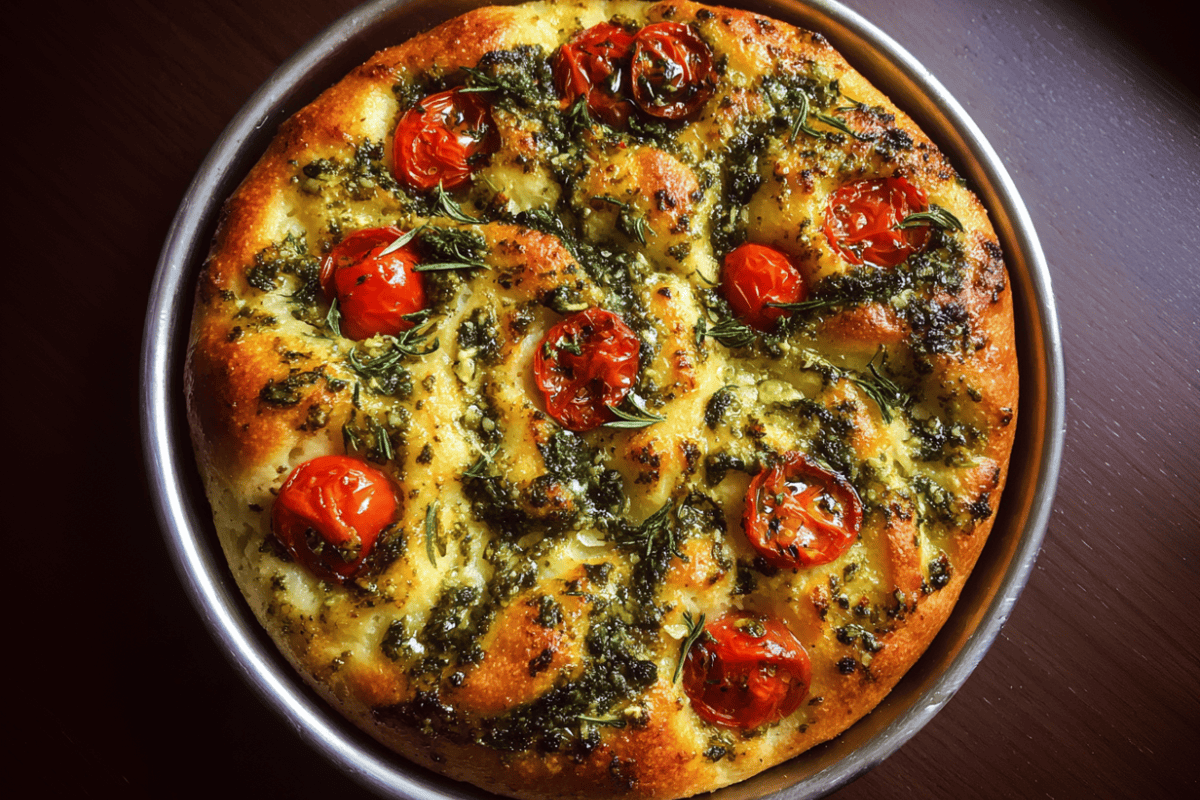
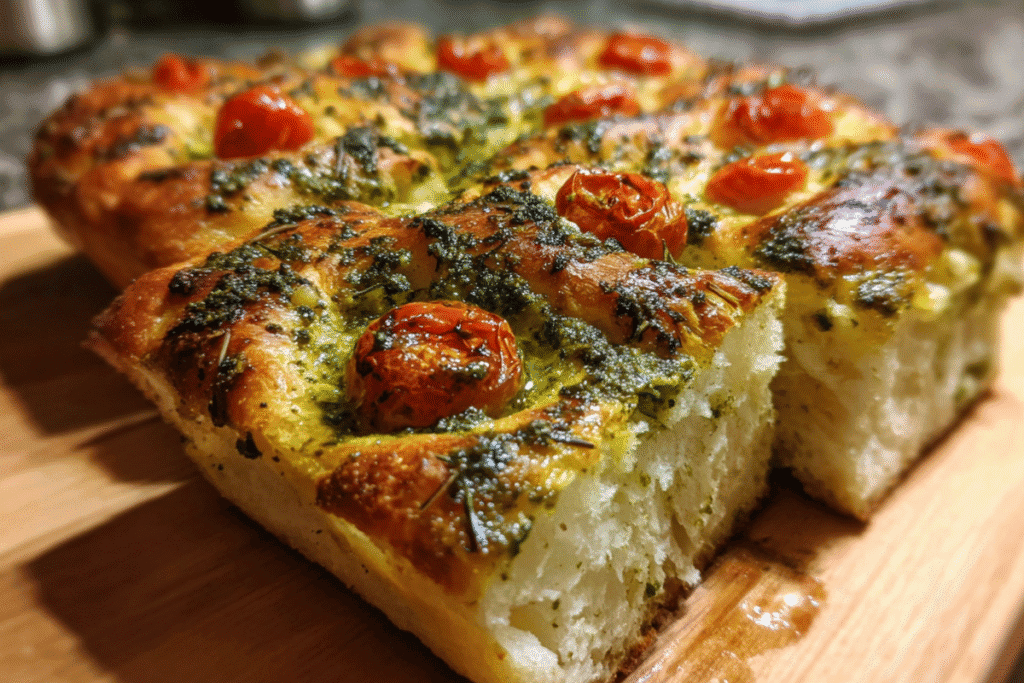
Few things in life smell as comforting as freshly baked bread, and no-knead focaccia bread with pesto is right at the top of that list. Imagine a golden, airy bread with crisp edges, a soft olive-oil-rich crumb, and pockets of fragrant pesto melting into every bite. Sounds dreamy, right? The best part is that this recipe requires no kneading, no special equipment, and no stress.
Table of Contents
Table of Contents
Whether you’re a beginner baker or someone who just wants bakery-quality bread without the workout, this recipe is for you. Let’s dive deep into everything you need to know, from ingredients and technique to storage, variations, and serving ideas.
Print
No-Knead Focaccia Bread with Pesto – Easy Homemade Recipe
- Total Time: 12–18 hours (including rising)
- Yield: 1 large focaccia (8–10 servings)
- Diet: Vegetarian
Description
Fluffy no-knead focaccia bread with pesto, crispy edges, soft inside, and rich olive oil flavor. Perfect for beginners.
Ingredients
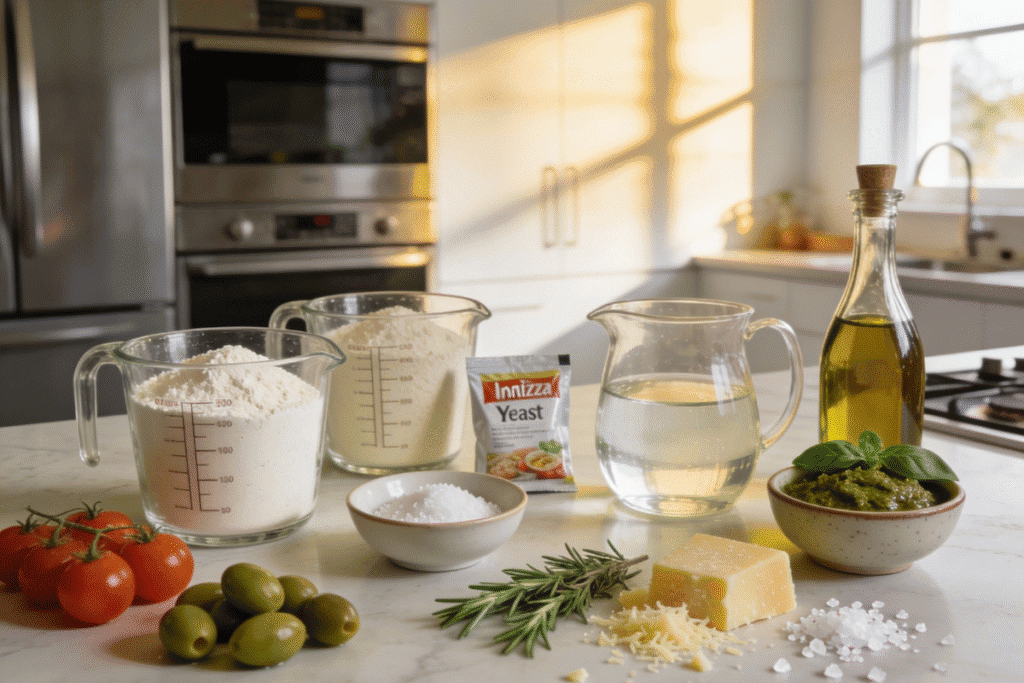
- 3 cups all-purpose or bread flour
- 1 ½ tsp salt
- 1 tsp instant yeast
- 1 ½ cups warm water
- ¼ cup extra virgin olive oil, plus more for pan
- ¼ cup basil pesto (homemade or store-bought)
- Optional toppings: cherry tomatoes, olives, fresh rosemary, grated parmesan, flaky sea salt
Instructions
- Mix flour, yeast, salt, water, and olive oil until sticky.
- Cover and let rise 12–18 hours at room temperature.
- Oil baking pan and transfer dough, stretch gently.
- Let dough rise 1–2 hours.
- Create dimples, drizzle olive oil, add pesto and toppings.
- Bake until golden brown and crispy.
Notes
- Use high-quality olive oil for best flavor.
- Allow long fermentation for airy texture.
- Customize toppings as desired.
- Dough can be refrigerated after first rise for up to 48 hours.
- Prep Time: 20 minutes
- Cook Time: 25–30 minutes
- Category: Bread, Appetizer, Side Dish
- Method: No-Knead, Oven-Baked
- Cuisine: Italian
What Is No-Knead Focaccia Bread?
No-Knead Focaccia Bread with Pesto is a classic Italian flatbread made from a wet, high-hydration dough that develops gluten naturally over time without any kneading. This no-knead method relies on patience rather than effort, allowing the dough to rest, ferment, and transform into a soft, airy, and flavorful bread infused with the rich taste of pesto.
Why Focaccia Is Perfect for No-Knead Baking
Focaccia is forgiving. Its rustic nature welcomes imperfections, making it ideal for no-knead methods. The dough is wet, sticky, and designed to be handled gently, not aggressively.
How Pesto Elevates Traditional Focaccia
Classic focaccia relies on olive oil, salt, and herbs. Adding pesto introduces basil, garlic, cheese, and nuts, turning a simple bread into a bold, aromatic centerpiece.
Why You’ll Love This No-Knead Focaccia Bread with Pesto
This recipe isn’t just easy, it’s rewarding. Every step feels simple, yet the result tastes impressive.
Key Benefits at a Glance
- No kneading required
- Minimal hands-on time
- Rich olive oil flavor
- Soft, airy interior with crispy edges
- Perfect for beginners and busy cooks
Perfect for Any Occasion
Serve it at dinner parties, bring it to potlucks, use it for sandwiches, or enjoy it warm straight from the pan. It fits every mood.
Ingredients for No-Knead Focaccia Bread with Pesto
Simple ingredients come together to create extraordinary flavor.
Dry Ingredients
- All-purpose flour or bread flour
- Instant or active dry yeast
- Salt
Wet Ingredients
- Warm water
- Extra virgin olive oil
Pesto Layer
- Basil pesto (homemade or store-bought)
Optional Toppings
- Cherry tomatoes
- Olives
- Fresh rosemary
- Flaky sea salt
- Grated parmesan
Choosing the Best Flour for Focaccia
Flour matters more than you think.
All-Purpose Flour
Creates a softer crumb and is easily accessible. Great for beginners.
Bread Flour
Higher protein means better structure and a chewier bite. Ideal if you want bakery-style focaccia.
The Science Behind No-Knead Dough
No-knead bread relies on time instead of muscle.
How Gluten Develops Naturally
Water hydrates the flour, and enzymes break down proteins over time. As the dough rests, gluten forms on its own.
Why Long Fermentation Improves Flavor
Slow fermentation allows yeast to create complex flavors, giving focaccia a slightly tangy, deep taste.
Step-by-Step: How to Make No-Knead Focaccia Bread with Pesto
Step 1: Mix the Dough
In a large bowl, combine flour, yeast, and salt. Add warm water and olive oil, then mix until a sticky dough forms. No kneading needed, just stir until combined.
Step 2: First Rise
Cover the bowl and let the dough rest at room temperature for 12 to 18 hours. It should double in size and look bubbly.
Step 3: Prepare the Baking Pan
Generously coat a baking pan with olive oil. This prevents sticking and creates crispy edges.
Step 4: Shape the Dough
Transfer the dough into the pan. Gently stretch it toward the edges. If it resists, let it rest for 10 minutes and try again.
Step 5: Second Rise
Cover the pan and let the dough rise again for 1 to 2 hours until puffy.
Step 6: Dimple and Add Pesto
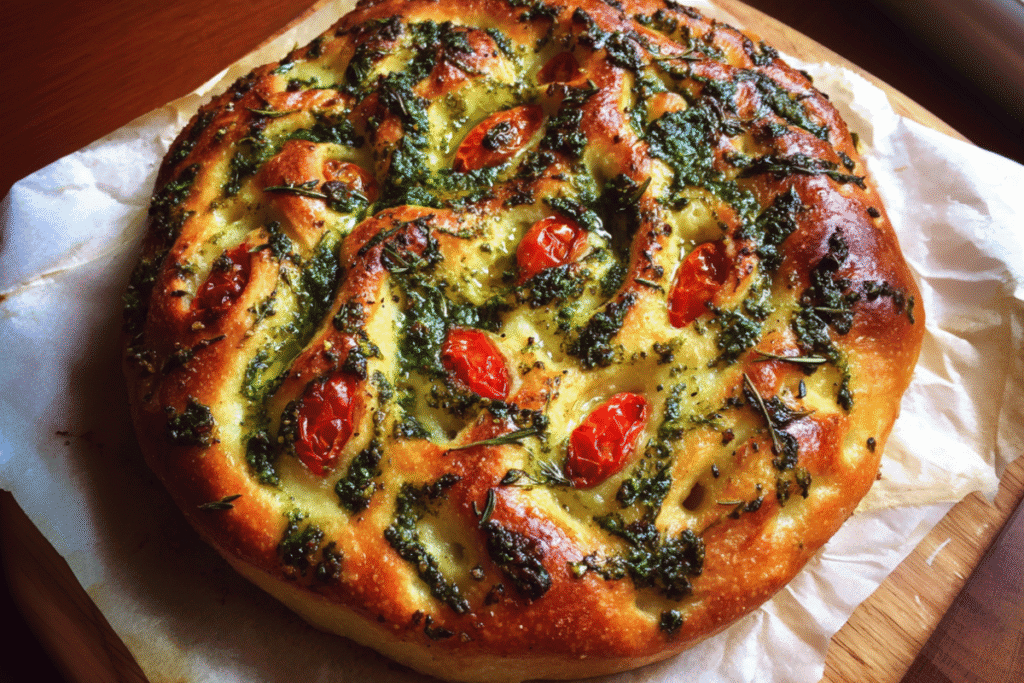
Drizzle olive oil over the dough. Use your fingers to create deep dimples. Spoon pesto into the dimples and swirl gently.
Step 7: Bake to Golden Perfection
Bake in a preheated oven until the focaccia is golden brown with crisp edges and a soft center.
Tips for Perfect No-Knead Focaccia Every Time
Use Plenty of Olive Oil
Don’t be shy. Olive oil is key to flavor and texture.
Don’t Rush the Rise
Time equals flavor. Let the dough ferment fully.
Dimple Deeply
Those dimples hold oil and pesto, creating bursts of flavor.
Homemade Pesto vs Store-Bought
Both work, but they offer different results.
Homemade Pesto
- Fresher flavor
- Customizable
- More vibrant color
Store-Bought Pesto
- Convenient
- Consistent
- Time-saving
If using store-bought, choose a high-quality brand with olive oil and real cheese.
Flavor Variations You’ll Love
No-knead focaccia is a blank canvas.
Mediterranean Focaccia
Add olives, sun-dried tomatoes, and oregano.
Cheesy Pesto Focaccia
Sprinkle mozzarella or parmesan before baking.
Garlic Lover’s Version
Add roasted garlic cloves and garlic-infused olive oil.
Vegan Option
Use vegan pesto and skip cheese toppings.
Serving Suggestions for Pesto Focaccia
This bread plays many roles.
As a Side Dish
Perfect with soups, salads, and pasta.
For Sandwiches
Slice horizontally and fill with grilled vegetables, chicken, or mozzarella.
As an Appetizer
Cut into squares and serve with olive oil or balsamic dip.
For Breakfast or Brunch
Top with eggs, avocado, or ricotta and honey.
How to Store and Reheat Focaccia
Storing at Room Temperature
Keep in an airtight container for up to 2 days.
Freezing Instructions
Wrap tightly and freeze for up to 2 months.
Reheating Tips
Warm in the oven to revive crispness. Avoid microwaving if possible.
Common Mistakes to Avoid
Using Cold Water
Yeast needs warmth to activate properly.
Underproofing the Dough
Flat focaccia usually means it didn’t rise enough.
Too Little Oil
This results in dry bread and poor texture.
Health and Nutrition Notes
While focaccia is indulgent, it can still fit into a balanced diet.
Why Olive Oil Is a Good Fat
Rich in monounsaturated fats and antioxidants.
Portion Control Tips
Serve smaller slices alongside protein and vegetables.
Why This Recipe Works for Beginners
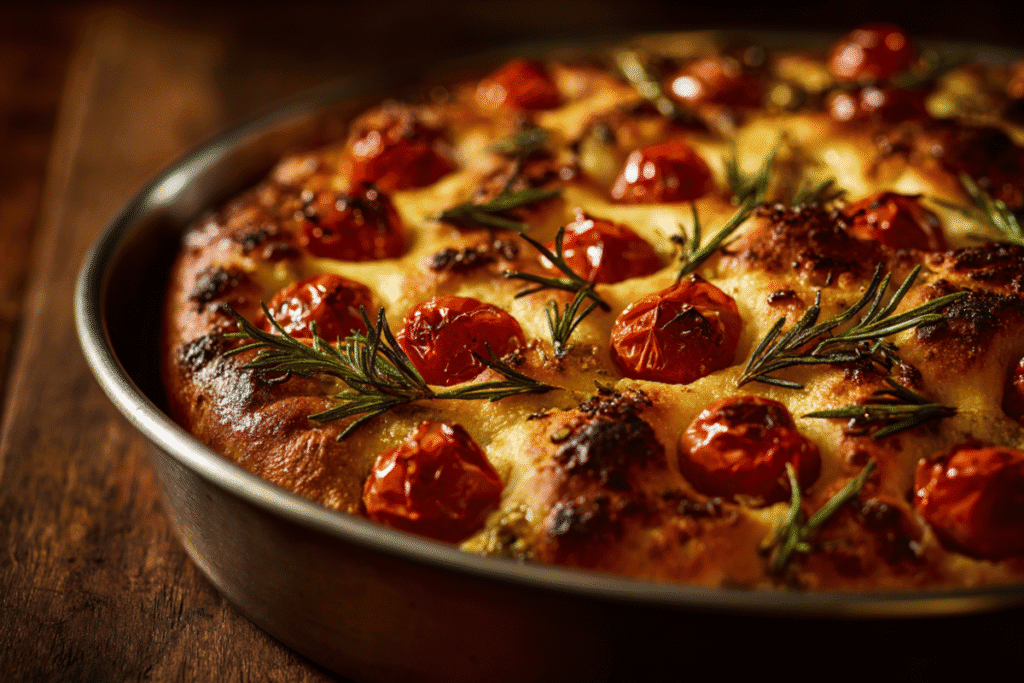
This no-knead focaccia bread with pesto removes fear from bread baking. No fancy tools, no complicated steps, just simple techniques and reliable results. It’s the kind of recipe that builds confidence fast.
Conclusion
No-knead focaccia bread with pesto is proof that incredible bread doesn’t have to be complicated. With minimal effort and a little patience, you get a golden, flavorful loaf that tastes like it came from an Italian bakery. Whether you’re baking for family, friends, or just yourself, this recipe delivers comfort, aroma, and satisfaction in every bite. Once you try it, it’s bound to become a staple in your kitchen.
FAQs
Can I make no-knead focaccia dough ahead of time?
Yes, the dough can be refrigerated after the first rise for up to 48 hours for even more flavor.
Why is my focaccia dense instead of airy?
Dense focaccia usually means underproofing or inactive yeast.
Can I use whole wheat flour?
Yes, but replace only up to 50% of the flour to avoid heaviness.
Do I need a stand mixer for this recipe?
No, a bowl and spoon are all you need.
Can I add pesto after baking?
You can, but baking it into the bread creates deeper flavor and aroma.