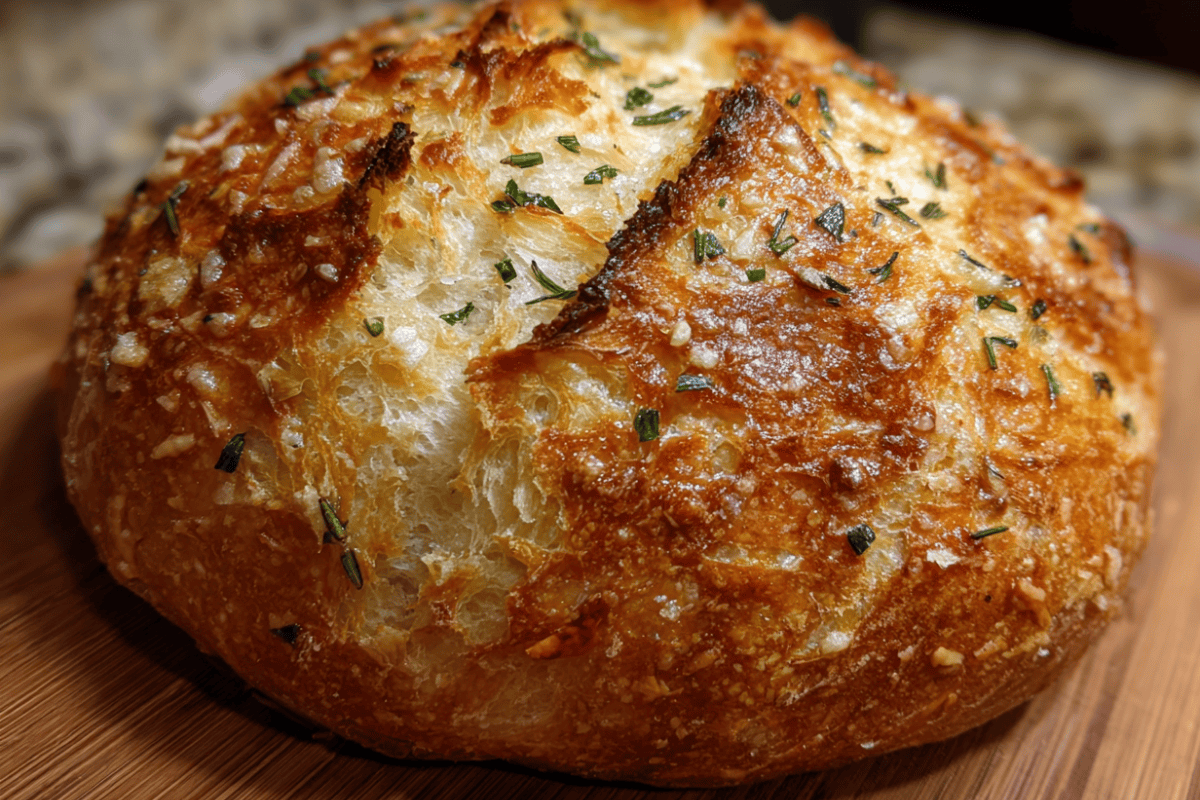
There’s something magical about the smell of freshly baked bread wafting through your kitchen. Add in the rich flavors of garlic and parmesan, and you’ve got a combination that’s irresistible. This guide will walk you through making the perfect Parmesan Garlic Artisan Bread at home. Whether you’re a seasoned baker or a newbie, this recipe is approachable, fun, and, most importantly, delicious.
Introduction to Artisan Bread
Artisan bread isn’t just bread. It’s an experience. With its rustic appearance, crisp crust, and soft, airy interior, artisan bread elevates any meal. Unlike store-bought bread, artisan bread is all about quality ingredients, careful technique, and time-honored methods.
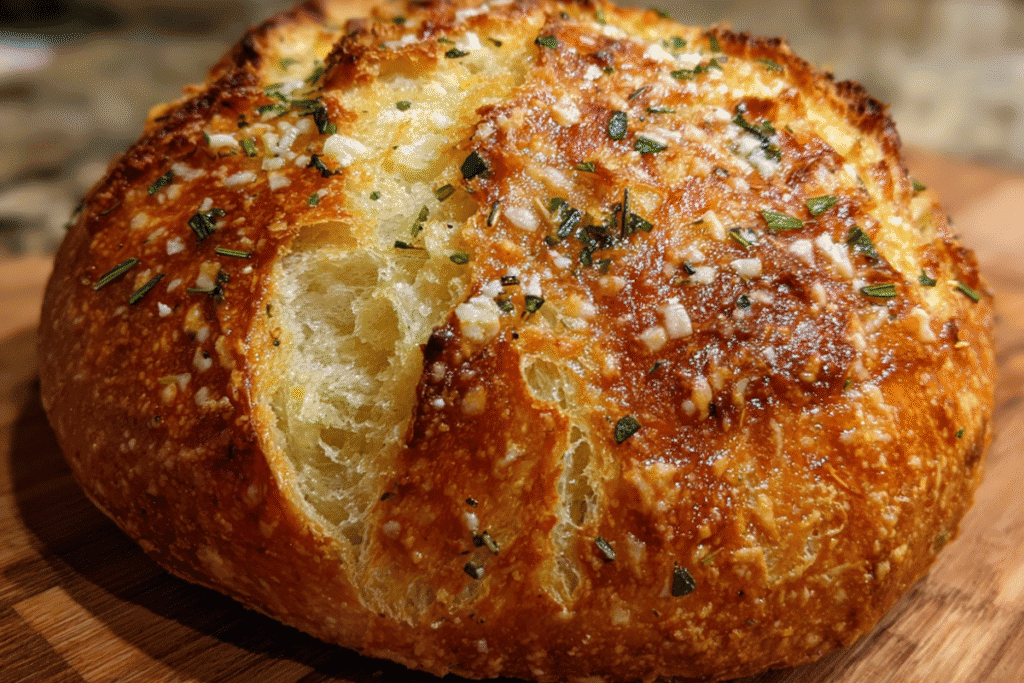
If you’ve ever bitten into a loaf and thought, “I wish I could make this at home,” this Parmesan Garlic Artisan Bread is the answer. It combines a classic artisan texture with the bold flavors of garlic and parmesan, perfect for sandwiches, soups, or just on its own.
Print
Parmesan Garlic Artisan Bread Recipe,Crispy, Cheesy & Homemade
- Total Time: 1 hour 45 minutes (including rise)
- Yield: 1 loaf
- Diet: Vegetarian
Description
Crispy Parmesan Garlic Artisan Bread with a soft, airy interior – perfect for sandwiches, soups, or snacking.
Ingredients
- 3 cups all-purpose flour (or bread flour)
- 1 ½ tsp salt
- 1 tsp sugar
- 2 ¼ tsp active dry yeast (1 packet)
- 1 cup warm water (105–115°F)
- 3 tbsp olive oil
- 3 cloves garlic, minced
- ½ cup grated parmesan cheese
- Optional: fresh herbs (rosemary, thyme)
Instructions
- Dissolve sugar in warm water and activate yeast for 5–10 min.
- Mix flour and salt; add olive oil, garlic, and yeast mixture.
- Knead dough 8–10 min until smooth and elastic.
- Let dough rise 1–2 hours until doubled.
- Fold in sautéed garlic and parmesan.
- Shape into loaf, let rise 30–45 min.
- Score top and bake at 425°F (220°C) for 25–30 min until golden.
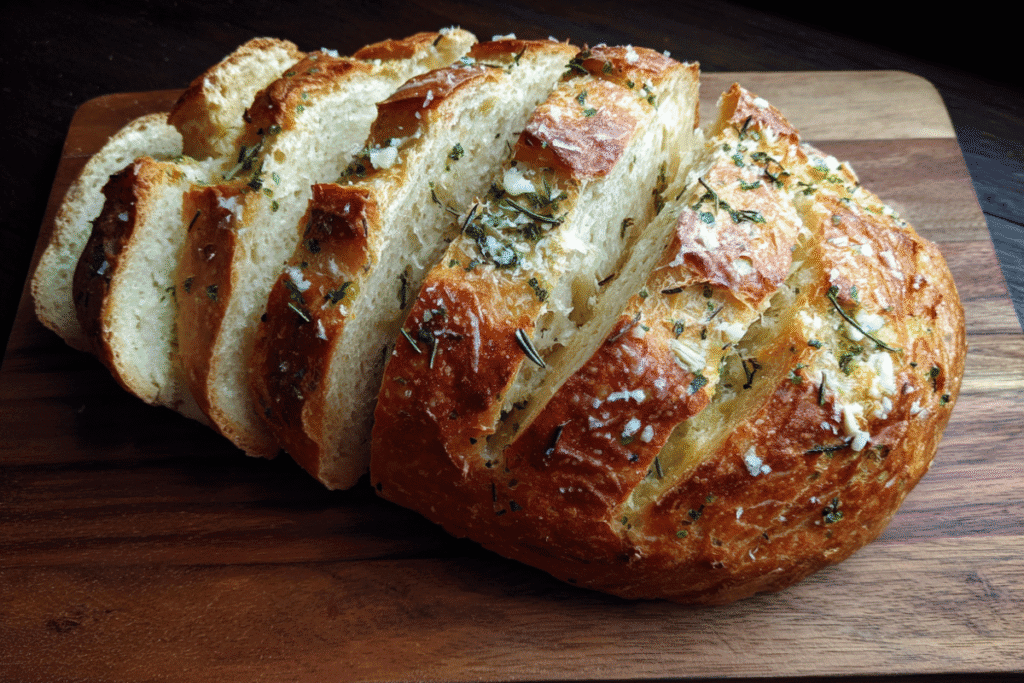
- Cool 20 min before slicing.
Notes
- Use bread flour for chewier texture.
- Optional herbs can be added for extra flavor.
- Steam in oven for a crispier crust.
- Store in paper bag at room temperature; freezes well up to 1 month.
- Prep Time: 15 minutes
- Cook Time: 25–30 minutes
- Category: Bread, Snack, Side
- Method: Baking
- Cuisine: Italian-American
Why Parmesan Garlic is a Perfect Match
Garlic and parmesan are like two best friends who never disappoint. Garlic adds a rich, aromatic depth, while parmesan brings a salty, nutty flavor that melts beautifully into the dough. Together, they create a bread that’s savory, fragrant, and utterly addictive.
Imagine slicing a warm loaf, the steam rising as the parmesan melts slightly and garlic aroma fills the room. This is comfort food at its finest.
Ingredients You’ll Need
Here’s what you’ll need for one loaf of Parmesan Garlic Artisan Bread:
- 3 cups all-purpose flour (or bread flour for extra chewiness)
- 1 ½ tsp salt
- 1 tsp sugar
- 2 ¼ tsp active dry yeast (1 packet)
- 1 cup warm water (105–115°F)
- 3 tbsp olive oil
- 3 cloves garlic, minced
- ½ cup grated parmesan cheese
- Optional: fresh herbs (rosemary, thyme)
Tip: Always measure ingredients precisely for the best results.
Choosing the Right Flour
Flour makes or breaks your bread. All-purpose flour works fine, but bread flour has higher protein content, which gives the bread a chewier texture and better structure. For a slightly nutty flavor, you can experiment with a blend of bread and whole wheat flour.
The Role of Yeast in Artisan Bread
Yeast is the magic behind the airy, soft texture of artisan bread. Active dry yeast or instant yeast both work, but the key is to ensure it’s fresh. Yeast needs warmth, moisture, and a little sugar to activate and create those perfect bubbles in the dough.
Preparing Your Dough
- In a small bowl, dissolve sugar in warm water. Sprinkle yeast over the top and let it sit for 5–10 minutes until foamy.
- In a large mixing bowl, combine flour and salt.
- Add olive oil, minced garlic, and the yeast mixture to the flour.
- Mix until a sticky dough forms.
Kneading: Technique and Tips
Kneading develops gluten, which gives the bread its chewy texture.
- Flour your hands and workspace lightly.
- Push the dough with the heel of your hand, fold it, and turn it.
- Continue kneading for about 8–10 minutes until smooth and elastic.
If the dough is too sticky, add a tablespoon of flour at a time. Too dry? Add a teaspoon of water.
First Rise: Patience is Key
Place your dough in a lightly oiled bowl and cover with a damp cloth or plastic wrap. Let it rise in a warm spot for 1–2 hours, or until it doubles in size.
Pro Tip: A slow rise in the fridge overnight can enhance flavor and texture.
Infusing Garlic and Parmesan
While the dough rises, prepare your flavor mix:
- Sauté minced garlic in a small pan with 1 tablespoon of olive oil for 1–2 minutes. Don’t brown it—just soften.
- Mix the sautéed garlic with grated parmesan.
Once your dough has risen, gently fold the garlic-parmesan mixture into it. Be careful not to deflate the dough too much.
Shaping Your Artisan Loaf
- Turn the dough onto a floured surface.
- Shape it into a round or oval loaf by folding edges into the center.
- Pinch the seams to seal and create tension on the surface for a better crust.
For a rustic touch, leave a few natural folds and imperfections—they add character!
Second Rise and Final Prep
Let the shaped loaf rise for another 30–45 minutes. Preheat your oven to 425°F (220°C) during this time.
Optional: Score the top with a sharp knife or razor for a classic artisan look. This allows the bread to expand without cracking randomly.
Baking: Temperature and Timing
- Place the loaf on a parchment-lined baking sheet or a preheated cast iron pan.
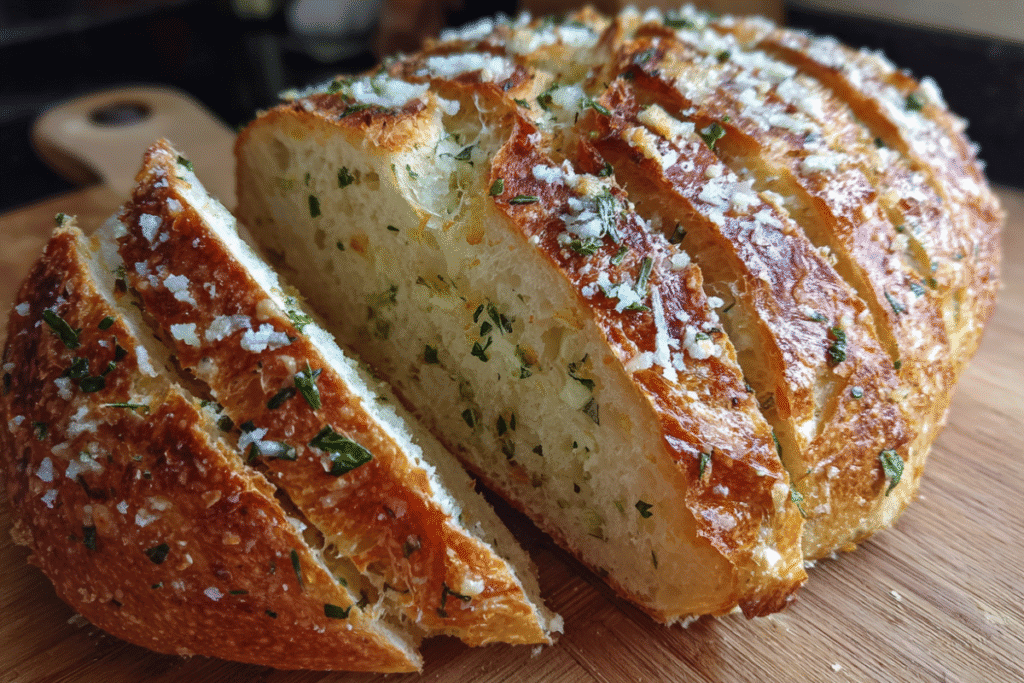
- Bake for 25–30 minutes, until golden brown.
- Optional: For an extra crusty exterior, place a small pan of water in the oven to create steam.
The bread is done when it sounds hollow when tapped on the bottom.
Tips for a Crispy Crust
- High heat is crucial for a crunchy exterior.
- Steam in the oven enhances the crust’s crispiness.
- Avoid cutting the bread immediately; let it cool for at least 20 minutes to finish cooking inside.
Storing and Serving Your Bread
Store your Parmesan Garlic Artisan Bread in a paper bag or wrapped in a clean kitchen towel at room temperature. Avoid plastic—this traps moisture and makes the crust soggy.
Reheat slices in a toaster or oven for that fresh-baked taste. Serve with:
- Olive oil and balsamic vinegar
- Butter and fresh herbs
- As a side to soups, salads, or pasta
Variations to Try
- Herb Infusion: Add rosemary, thyme, or oregano to the dough.
- Cheese Lovers: Mix in mozzarella or cheddar along with parmesan.
- Spicy Twist: Add red pepper flakes for a mild kick.
- Stuffed Bread: Include roasted garlic cloves or caramelized onions inside the loaf.
Pairing Ideas
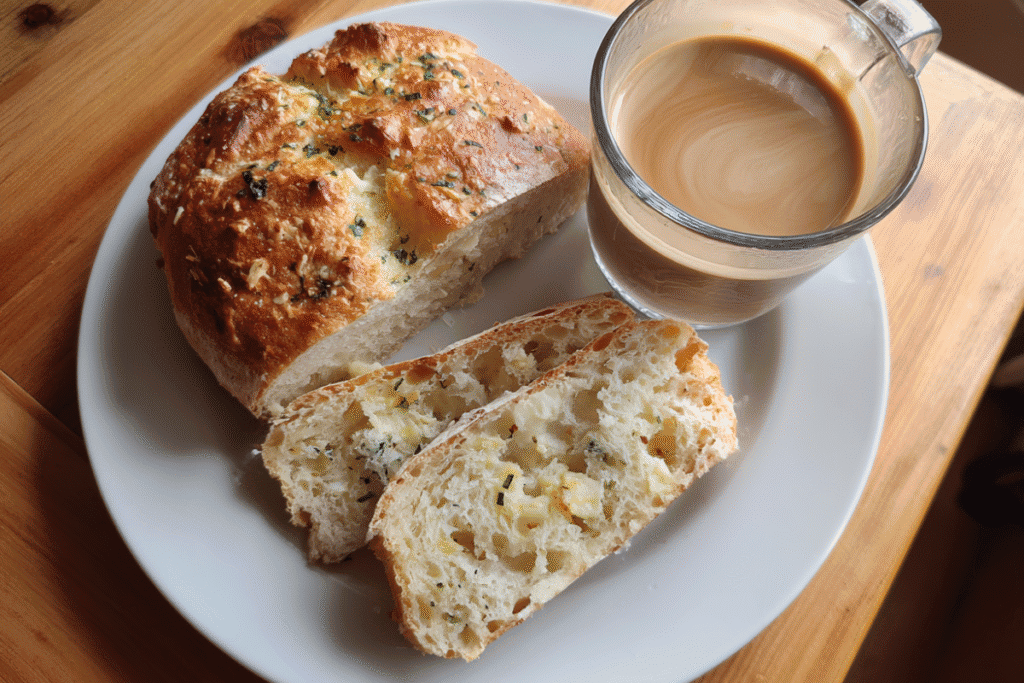
Parmesan Garlic Artisan Bread pairs beautifully with:
- Creamy soups like tomato bisque or broccoli cheddar
- Fresh salads for a hearty side
- Charcuterie boards with cured meats and cheeses
- Homemade dips like spinach-artichoke or hummus
Health Benefits of Garlic and Parmesan
- Garlic: Contains allicin, which has antioxidant and anti-inflammatory properties, supporting heart health.
- Parmesan: Rich in protein, calcium, and healthy fats for bone strength.
Enjoying this bread occasionally can be both indulgent and nourishing.
Troubleshooting Common Problems
Bread didn’t rise:
- Check yeast freshness.
- Ensure water isn’t too hot (kills yeast) or too cold (slows activation).
Crust too hard:
- Reduce baking time slightly or cover with foil for the last 5 minutes.
Bread too dense:
- Knead longer to develop gluten.
- Make sure dough doubled in size during first rise.
Conclusion
Making Parmesan Garlic Artisan Bread at home isn’t just baking—it’s an experience. From the aroma of garlic sizzling in olive oil to the crunch of a golden crust, each step rewards you with flavors and satisfaction that store-bought bread can’t match. With a little patience, quality ingredients, and these tips, you can create a loaf that will impress family, friends, and even yourself.
Whether enjoyed warm with butter, dipped in olive oil, or served alongside your favorite meal, this bread proves that artisan baking is both accessible and endlessly rewarding.
FAQs
1. Can I use whole wheat flour instead of all-purpose?
Yes! Use a 50/50 blend of whole wheat and all-purpose flour for best results. The texture will be slightly denser but still delicious.
2. How long does this bread stay fresh?
At room temperature, it stays fresh for 2–3 days. You can freeze it for up to 1 month.
3. Can I make this bread without a stand mixer?
Absolutely! Hand-kneading works just as well, though it requires a bit more elbow grease.
4. Can I add more cheese?
Yes! Adding extra parmesan or mixing in mozzarella gives a gooier, cheesier loaf.
5. Is it possible to make this gluten-free?
You can try a gluten-free flour blend, but the texture will differ. Use xanthan gum to help with structure.